Choosing between a fixed blade vs folding knife comes down to how you actually use your knife everyday carry, camping, hunting, survival, or self‑defense. This guide breaks each use case down so you can pick the knife that fits your lifestyle, not just the specs.
What Is a Fixed Blade Knife?
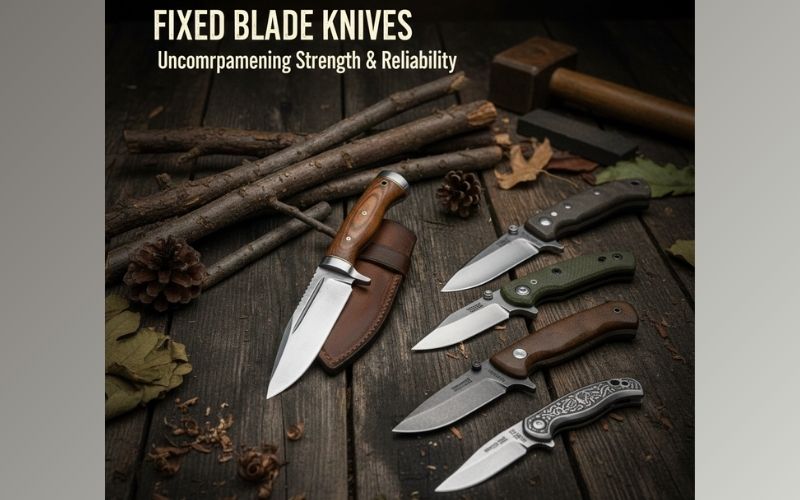
A fixed blade knife has a solid blade that does not fold; the blade and handle are one continuous piece, usually carried in a sheath on your belt or gear. This simple, solid construction makes a fixed blade strong, dependable, and ready to use instantly just draw and cut.
When people ask “what is a fixed blade knife” or “what is a fixed blade,” they usually mean knives built for serious work: camping, hunting, survival, tactical and heavy utility. Within types of fixed blade knives, you’ll find compact EDC fixed blades, hunting knives with skinning profiles, bushcraft and survival blades, and larger tactical designs.
What Is a Folding Knife (Folder)?
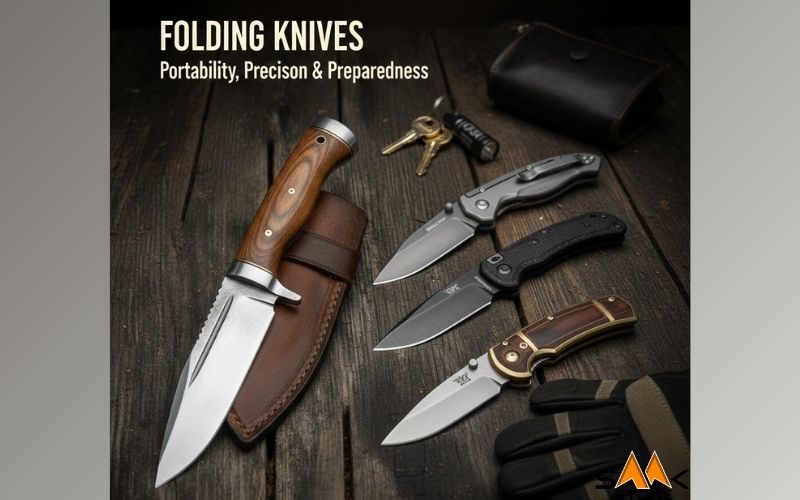
A folding knife (often called a folder or foldable knife) has a blade that pivots into the handle, making it compact and pocket‑friendly. You carry it clipped inside a pocket, on a waistband, or in a small pouch, and open it with one or two hands depending on the design.
Foldable knives are popular for everyday carry because they are discreet, lightweight, and easy to keep on you all day. When comparing a fixed blade knife vs folding, folders win on portability and convenience, but not on raw strength.
Fixed Blade vs Folding Knife: Core Differences
At a high level, the fixed blade vs folding knife debate is really about strength versus convenience. A fixed blade is like a solid tool from your toolbox; a folder is like a compact multi‑tool you always have with you.
Pros and Cons of Fixed Blade vs Folding Knifes:
- Strength and durability: Fixed blades are stronger because there is no hinge or lock to fail, making them ideal for hard work, survival tasks, and heavy cutting.
- Portability and concealment: Folding knives are easier to carry, more discreet, and usually more socially acceptable as an EDC.
- Speed and readiness: A fixed blade is ready the moment it leaves the sheath, while a folder still needs to be opened, even if the action is quick.
- Maintenance and cleaning: Fixed blades are easier to clean after hunting, camping, or food prep because there are no internal moving parts.
- Safety and mechanics: Folders rely on locks and pivots excellent designs are very safe, but cheap or poorly maintained ones can fail.
Fixed Blade vs Folding EDC Knifes
For EDC, your knife lives in your pocket, not in a drawer. That’s where the fixed blade vs folding knife EDC question becomes practical, not theoretical.
- EDC folding knife advantages: Slim profile, easy to carry at work or in the city, less attention‑grabbing, and often more acceptable in everyday environments.
- EDC fixed blade advantages: Faster deployment (no opening step), no lock to fail, and consistent grip and feel every time you draw.
If you live where small fixed blades are legal and you want maximum reliability, a compact fixed blade on the belt or inside‑the‑waistband can be a strong EDC choice. If you need something low‑profile that disappears into your pocket, a well‑made folding EDC knife is usually the better fit.
Folding vs Fixed Blade Hunting Knife
When you’re in the field, your knife has to handle field dressing, skinning, and game processing without failing at the worst moment. That’s why many experienced hunters still prefer a folding vs fixed blade hunting knifes comparison that leans toward fixed blades.
- Hunting fixed blade advantages: Stronger for joint cuts and light bone work, easier to clean blood and fat from a single solid piece, better control with full‑tang designs.
- Hunting folder advantages: Easier to carry in a pocket or small pouch, good as a backup knife or for lighter tasks like cutting cord or opening packages.
If hunting is your primary use, a quality fixed blade hunting knife should be your main tool, with a folding knife as a secondary or backup. For occasional hunters who value compact carry above all, a robust hunting folder can still work, but it should be built to handle tough tasks.
Fixed Blade vs Folder Camp Knife
On a camping trip, your knife is a general‑purpose tool: food prep, rope cutting, light wood processing, and gear repair. This is where the fixed blade vs folder camp knife decision really shows in day‑to‑day use.
- Fixed blade camp knife: Better for splitting kindling (batoning), carving stakes, processing firewood, and doing rough outdoor chores.
- Folding camp knife: Great for food prep, light tasks around camp, and as an all‑purpose pocket tool when you’re walking around or away from your main pack.
For camping, the ideal setup is often a fixed blade as your main camp knife plus a folding knife as a compact secondary. If you only want one knife, choose a fixed blade if you do more bushcraft‑style camping, and a folder if you mostly camp in established sites and do lighter tasks.
Fixed Blade vs Folding Knife for Survival
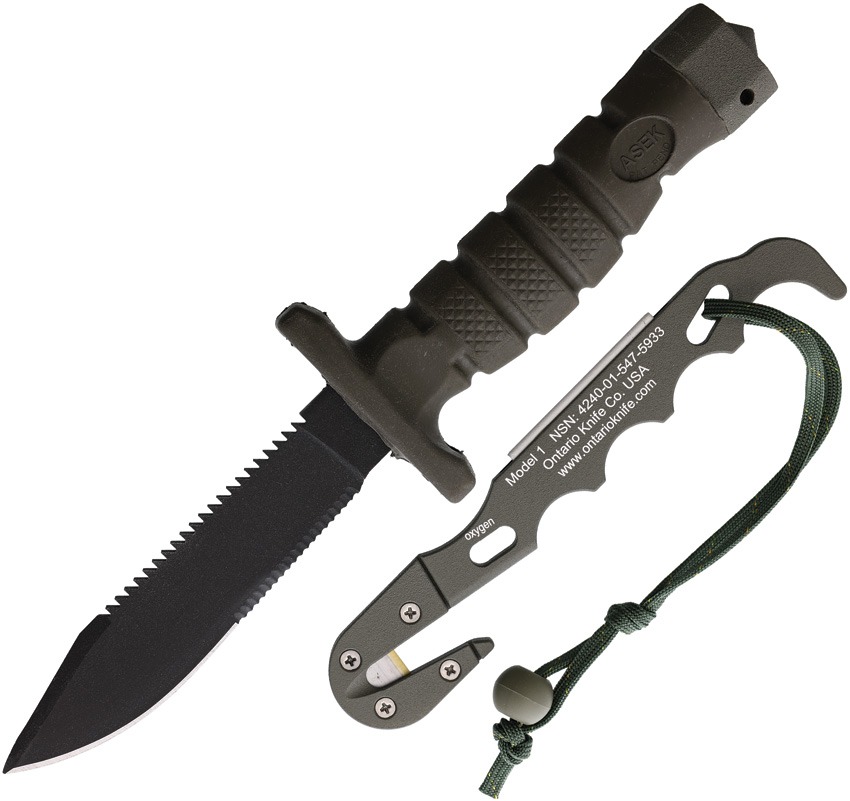
Survival situations demand maximum reliability, which is why most survival instructors recommend a solid fixed blade. When you compare fixed blade vs folding knifes for survival, the fixed blade usually wins on every critical survival task.
- Survival fixed blade advantages: Full‑tang designs resist breakage, handles batoning, prying, notching, shelter building, and heavy carving better than most folders.
- Survival folder limitations: Even strong folders have moving parts that can collect dirt, sand, blood, or moisture; locks and pivots can fail or gum up over time.
For serious survival, bushcraft, or prepping, your primary tool should be a robust fixed blade knife. A folding knife still makes a great backup or fine‑task tool, but your life should not depend on a hinge.
Fixed Blade vs Folding Knife for Self Defense
The fixed blade vs folding knife for self defense question is sensitive and depends heavily on your local laws and training level. A knife is a last‑resort tool, and you should know the legal risks before carrying any blade for self‑defense.
From a purely functional perspective:
- Fixed blade for self‑defense: Faster deployment (draw and you’re ready), fewer mechanical failure points, consistent grip and orientation in the hand.
- Folding knife for self‑defense: More discreet to carry, easier to justify as a tool in everyday environments, and less likely to attract attention when not in use.
If you’re considering a knife for self‑defense, focus first on legality, training, and safe handling before choosing between fixed and folding. For most people, an EDC folder carried primarily as a tool is the more realistic option, with any self‑defense use as an absolute last resort.
Besides Fixed Blades and Removable Blades
When people search “besides fixed blades and removable blades,” they’re usually trying to understand all the knife construction types. Fixed blades and folding knives cover most everyday needs, but there are also:
- Replaceable‑blade knives (e.g., scalpel‑style hunting knives) where the cutting edge pops in and out.
- Multi‑tools with integrated blades, which act like compact folders.
- These tools fill specific niches, but for most users, the fixed blade vs folding knife decision is still the core choice.
Quick Decision Guide: Which Knife Is Best for You?
Use this simple checklist to decide between a fixed blade and a folder based on how you actually live and carry.
Choose a fixed blade knife if:
- You camp, hunt, or hike regularly and need strength more than stealth.
- You want the most reliable option for survival, bushcraft, or heavy outdoor work.
- You prefer fast, no‑fuss deployment with no moving parts.
Choose a foldable knife (folder) if:
- You need a compact EDC that disappears into your pocket.
- You live or work where open carry of a fixed blade isn’t practical or acceptable.
- You want a lightweight, everyday tool for cutting tasks, packages, and light outdoor use.
If you’re still unsure, start with a good folding EDC knife and add a fixed blade when you begin camping, hunting, or training more seriously.
FAQs
Are fixed blade knives better than folding knives?
Fixed blade knives are better for strength, survival, heavy outdoor work, and hard use. Folding knives are better for everyday carry, portability, and discreet use in daily life.
Can a folding knife replace a fixed blade for camping?
For light camping and basic tasks, a strong folding knife can work. For processing wood, shelter building, and survival‑oriented trips, a fixed blade camp knife is much more reliable.
What is a fixed blade vs removable blade?
A fixed blade is a single, solid piece of steel attached to a handle, while removable‑blade knives let you swap out thin replaceable blades, usually for very fine cutting tasks.