How to sharpen knives at home transforms dull blades into razor performance without expensive services. Kitchen chef knives tear food fibers, EDC pocket knives struggle cutting cardboard, hunting blades waste meat, and Japanese single-bevel blades lose their signature bite. This comprehensive guide covers 15-20 degree sharpening angles, 400/1000/6000 grit whetstone progression, honing steel vs sharpening steel differences, pull-through sharpeners, diamond pocket sharpeners, sandpaper sharpening techniques, leather stropping with compounds, electric sharpeners, serrated edge maintenance, folding knife pivot concerns, and chasing the burr method.
Knife Edge Anatomy: Understanding What You’re Fixing
Knife edges develop micro-chips, rolled apexes, and wire edges after normal cutting. Honing realigns the edge temporarily. Sharpening removes damaged metal to create new bevels.
Edge types ranked by sharpening difficulty:
- Straight edge (double bevel): Chef knives, EDC folders
- Single bevel (chisel grind): Japanese knives, some hunting
- Serrated edge: Bread knives, survival saws
- Scandi grind: Bushcraft knives (easier angle control)
Sharpness progression tests:
- Thumbnail test: Edge catches without sliding
- Paper slicing: Clean cut without tearing
- Tomato test: Skin separates instantly
- Hair shaving: Mirror finish edge (razor level)
Sharpening Angles by Knife Type: Precision Matters
Angle guide prevents edge damage:
| Knife Type | Per Side Angle | Total Inclusive | Primary Use | Example Blades |
| Chef knives (how to sharpen your kitchen knives) | 15-18° | 30-36° | Food prep | 8″ German chef, Santoku |
| EDC folders (how to sharpen a folding knife with a stone) | 17-22° | 34-44° | Daily utility | Benchmade Bugout, Spyderco |
| Hunting skinning (best knife for field dressing) | 20-25° | 40-50° | Game processing | Buck 119, Benchmade Steep Country |
| Japanese single bevel | 12-15° (one side only) | N/A | Precision slicing | Yanagiba, Deba |
| Tactical folders | 20-25° | 40-50° | Hard use | Cold Steel Recon, Zero Tolerance |
Angle guides ($10 plastic wedges) clamp to the blade spine for consistency.
Method 1: Whetstone Sharpening (Best Control, Pro Results)

Tools needed: 400 grit (coarse), 1000 grit (medium), 6000 grit (polish), flattening stone, angle guide, stropping compound.
10-step whetstone process:
- Soak stones 10-15 minutes (skip diamond/splash stones)
- Set angle guide spine clamp (17° EDC, 15° kitchen)
- 400 grit coarse: 10 passes leading edge forward, 10 trailing edge back
- Feel micro-burr along entire edge with fingertip
- Flip stone alternate sides maintaining pressure equality
- Switch 1000 grit same strokes until 400 grit scratches disappear
- Chase burr progressively finer grits (1500/3000/6000)
- Strop leather 20 passes each side with green chromium oxide
- Final test paper shaving, tomato slicing
- Flatten stone after 3-5 knives with diamond plate
Whetstone progression chart:
| Grit | Purpose | Passes Per Side | Steel Type | Removes |
| 400 | Repair chips | 15-25 | All steels | Heavy damage |
| 1000 | Main bevel | 10-15 | Carbon/stainless | Primary sharpening |
| 3000-6000 | Polish/hone | 8-12 | Japanese steels | Mirror refinement |
| Leather strop | Final polish | 20-30 | All blades | Burr removal |
Method 2: Pull-Through Sharpeners (Fastest, Beginner-Friendly)
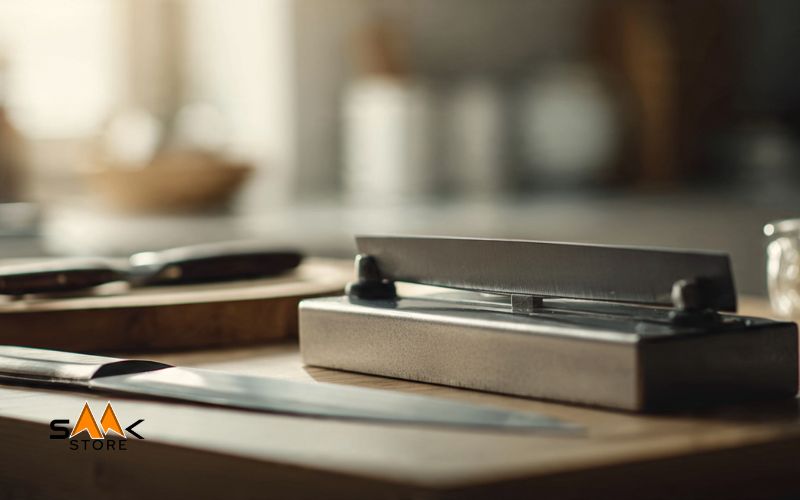
Chef’sChoice Trizor XV ($150) creates a 15° Japanese-style double bevel. AccuSharp 021C ($25) diamond compound hones any angle.
Pull-through advantages:
- Fixed angles eliminate guesswork
- Cross-grind technology creates stronger edge geometry
- 30 seconds total time
- Dishwasher safe honing puck included
Limitations: Won’t fix major chips. Not ideal for convex grinds (Scandi).
Pull-through technique:
- Soak honing puck 1 minute
- Pull blade straight through coarse slot 3x
- Fine slot 3x opposite direction
- Honing puck 10x each side
- Test paper slicing
Method 3: How to Sharpen Without Sharpener (Household Hacks)
Sandpaper method (free, surprisingly effective):
Materials: 400/800/1200 grit wet/dry sandpaper, mousepad, marker.
- Mark bevel permanent marker (visual angle guide)
- Tape mousepad to table (non-slip surface)
- 400 grit spine-to-edge 20 strokes per side
- Marker check (ink removal = metal removal)
- Progress 800 → 1200 grit
- Final strop leather belt or cardboard (polish)
Coffee mug hack (travel sharpening):
- Ceramic mug bottom (unglazed ring) = 1000 grit equivalent
- 20 circles clockwise/counterclockwise
- Emergency field sharpening only
Cardboard honing: Denim jeans or cardboard box edge polishes edges mirror clean.
Method 4: Honing Steel vs Sharpening Stick Confusion
Honing steel (smooth rod): Realigns burrs, doesn’t remove metal. Daily maintenance.
Sharpening steel (grooved): Minimal metal removal, weekly use.
Ceramic honing rod: Aggressive realignment for Japanese knives.
Daily honing technique:
- 45° angle to blade spine
- Leading edge swipe (heel-to-tip) 8 strokes per side
- Listen for ringing (metal feedback confirms contact)
- Store horizontally (prevents tip damage)
Folding Knife Sharpening Special Considerations
Pivot area cleaning prevents binding:
- Disassemble (Torx T6/T8 common)
- KPL grease on bearings/pivot
- Flitz polish titanium frame
- Reassemble finger tight
Pocket clip removal exposes full tang for stone access.
Liner/frame lock knives: Sharpen stop side first (unlocked position).
Serrated Edge Maintenance (Bread Knives, Survival)
Tapered diamond rod navigates gullets:
- Match rod diameter to serration size
- Circular strokes inside each gullet
- 10 passes per tooth
- Flat hone backside lightly
Electric sharpeners with serrated slot (Chef’sChoice 320).
Steel Types Sharpening Difficulty Ranked
| Steel | Hardness (HRC) | Sharpening Ease | Recommended Grit | Stone Type |
| 8Cr13MoV (budget EDC) | 57-59 | Very easy | 400/1000 | Diamond |
| VG-10 (Japanese) | 59-61 | Easy | 1000/3000 | Water |
| S30V/S35VN (premium) | 59-62 | Medium | 400/1500 diamond | Diamond |
| CPM-MagnaCut | 60-64 | Hard | 220/600 diamond | Diamond only |
High vanadium steels (D2, S90V) require diamond abrasives exclusively.
Angle to Sharpen Kitchen Knife: Precision Techniques
- German chef knives: 17-20° per side (34-40° inclusive)
- Japanese chef knives: 12-15° per side (24-30° inclusive)
- Santoku: 15° per side (30° inclusive)
- Paring knives: 12-15° per side
Angle cube ($15 digital) mounts on spine for exact measurement.
Freehand sharpening landmarks:
- Knife edge touches stone = 0°
- Spine parallel stone surface = 45° landmark
- Eyeball half spine height = 15-20° working angle
Leather Stropping: Mirror Polish Finish
20 passes per side with green chromium oxide compound creates hair-popping edges.
Stropping progression:
- Rough leather (neatsfoot oil) = 1000 grit equivalent
- Loaded compound = 8000+ grit polish
- Clean strop = final burr removal
- Power strop (leather wheel) = razor finish
DIY strop: Old leather belt + plywood backing + polishing compound.
Maintenance Schedule: Keep Edges Factory Sharp
- DAILY: Honing steel 8x per side
- WEEKLY: Leather strop 20x per side
- MONTHLY: 1000 grit maintenance sharpen
- POST-FIELD: 400 grit repair + 6000 polish
Edge leading indicators:
- Food tearing instead of slicing
- Increased cutting pressure required
- Blade reflects light along edge (rolled apex)
Troubleshooting Common Sharpening Mistakes
Problem: Edge won’t bite paper
Solution: Increase grit progression (3000+ polish needed)
Problem: Bites paper, won’t shave arm
Solution: Burr remains. Additional stropping required
Problem: New edge chips immediately
Solution: Angle too acute for steel hardness
Problem: Japanese knife digs unevenly
Solution: Single bevel sharpening (ura-oshi technique)
Tools to Sharpen Knives Complete Starter Kit ($50 Total)
✅ King 1000/6000 grit combo stone ($35)
✅ Diamond flattening plate ($10)
✅ Angle guide cube ($5)
✅ Leather strop + compound ($15 total)
✅ Ceramic honing rod ($12)
✅ Work Sharp pocket sharpener (backup, $25)
Sharpening progression time: 25 minutes first knife, 8 minutes maintenance.
Quick Methods Comparison: Choose Your Perfect Fit
| Method | Beginner | Time | Cost | Edge Quality | Maintenance |
| Pull-Through (how to sharpen a knife with a knife sharpener) | ★★★★★ | 2 min | $25 | Good | Easy |
| Whetstone (sharpen knife how to) | ★★☆☆☆ | 25 min | $50 | Excellent | Medium |
| Pocket Diamond (tools to sharpen knives) | ★★★★☆ | 5 min | $20 | Very good | Very easy |
| Sandpaper | ★★★☆☆ | 15 min | $5 | Good | Easy |
| Electric (how do you sharpen a knife at home) | ★★★★★ | 1 min | $100+ | Very good | Very easy |
Conclusion:
Mastering how to sharpen knives at home means consistent angles, proper grit progression, and regular maintenance. Whetstones deliver pro results, pull-through sharpeners save time, diamond pockets travel perfectly. Every kitchen chef knife, EDC folder, and hunting blade deserves razor performance through proper home sharpening techniques.
FAQ:
How to sharpen knives at home without whetstone?
Pull-through sharpener or diamond pocket hone. 30 seconds total time. (62 chars)
Angle to sharpen kitchen knife chef blade?
15-18 degrees per side. German 17-20, Japanese 12-15 degrees. (58 chars)
How to sharpen a folding knife with a stone safely?
Disassemble pivot first. Sharpen stop side unlocked position. (60 chars)
How to sharpen your kitchen knives daily maintenance?
Honing steel 8 strokes per side. Ceramic rod weekly Japanese. (64 chars)
Tools to sharpen knives beginner complete kit?
1000 grit whetstone + angle guide + leather strop = $50 total. (62 chars)
How to sharpen a knife without a sharpener household?
Sandpaper (400/800/1200) on a mousepad or ceramic mug bottom ring. (66 chars)
Sharpening stick vs honing steel difference?
Honing realigns burrs. Sharpening sticks minimally remove metal. (64 chars)